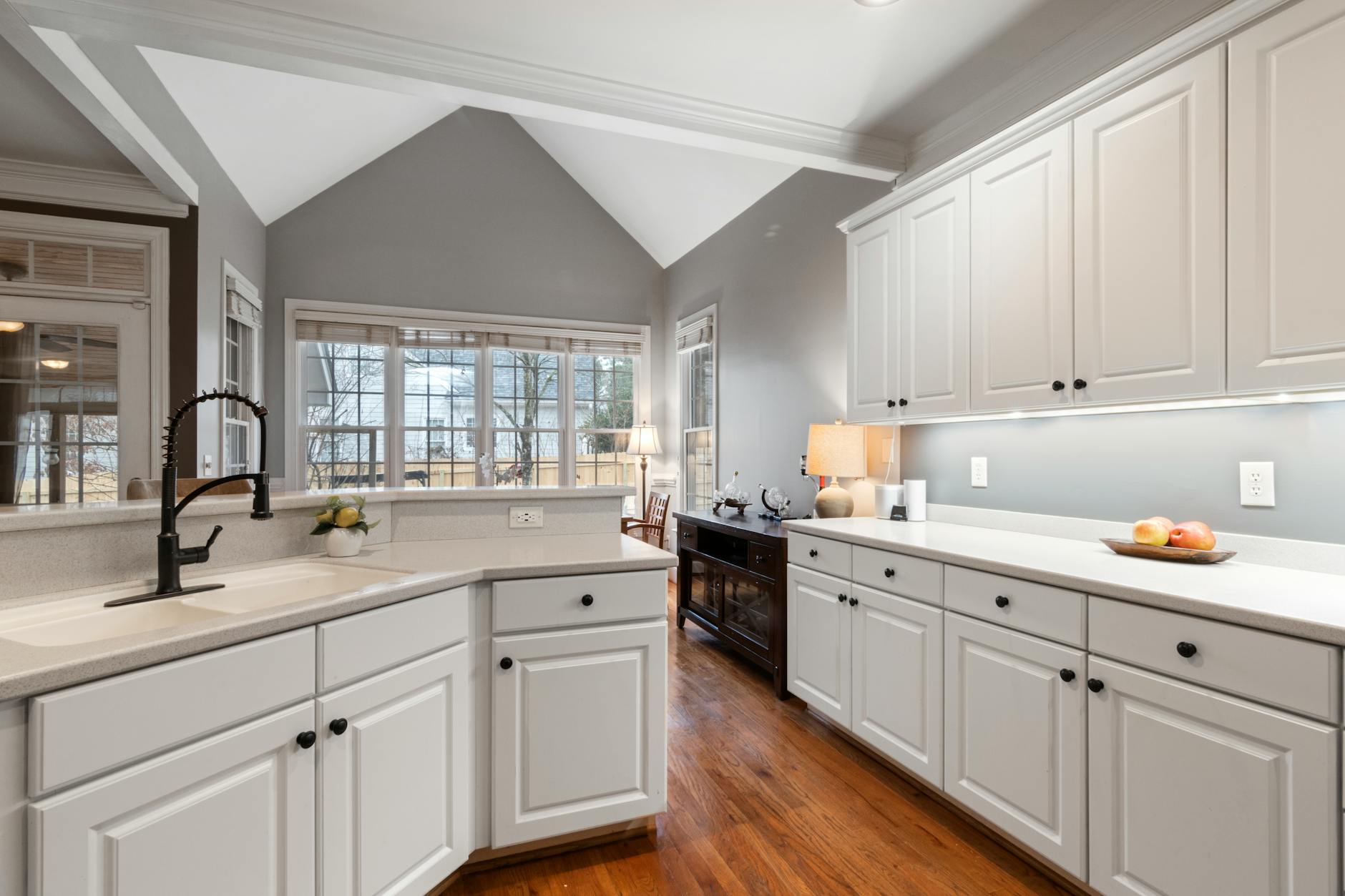
The kitchen lighting that improves the room most is layered: bright, even ambient light overhead, dedicated task light under the wall cabinets, and a warm accent or pendant light for atmosphere, all on separate switches or dimmers. If you can only add one thing, add under-cabinet task lighting, because a single ceiling fixture leaves your hands and the counter in shadow.
The rest comes down to a few choices: how much light you need, what color it should be, and where to put it. The sections below cover each, with numbers you can use when you shop.
Why a single ceiling light fails
A lone overhead fixture lights the room from above and behind you. When you stand at the counter, your head and shoulders block the light and cast a shadow right on the cutting board. The center of the room is bright, and the corners and the countertops along the walls are dim. Shadows also make food prep harder and less safe, because it is harder to see knife edges and the doneness of food.
Layering fixes this. Three layers cover most needs:
- Ambient light: General light for the whole room, usually from ceiling fixtures, recessed cans, or a flush mount.
- Task light: Focused light where you work, such as under-cabinet lights, a light over the sink, and over an island.
- Accent or decorative light: Pendants, toe-kick glow, or lights inside glass cabinets that add mood and depth.
Separate switches or dimmers let you run only task light for a late snack and full ambient light for cleanup.
Know the numbers: lumens, color temperature, and CRI
Three specs matter more than wattage on a box.
Lumens measure brightness. Published lighting guidance for kitchen work areas is expressed in foot-candles: the National Kitchen & Bath Association’s lighting tips cite a minimum of 50 foot-candles at the work surface, which is why a lone ceiling fixture often falls short on the counter. Ceiling height, wall color and daylight all shift how much light a room needs, so treat any number as a starting point.
Color temperature is measured in kelvins. Lower numbers are warmer.
| Color temperature | Look | Good for |
|---|---|---|
| 2700K | Warm, yellow-white | Cozy ambient light, pendants |
| 3000K | Soft white | A common all-purpose home pick |
| 3500K | Neutral white | Task areas, where NKBA tips suggest it imitates daylight |
| 5000K and up | Cool, bluish | Often feels harsh in a home kitchen |
Whatever you pick, keep the temperatures within a narrow range so the room does not look patchy. Mixing 2700K and 5000K bulbs in the same room is a common mistake.
CRI (color rendering index) tells you how accurately a light shows colors. LED products are available with a CRI of 90, and a higher CRI makes meat, produce and wood tones look more natural. Low-CRI lights can make food look dull.
Under-cabinet lighting is the biggest single improvement
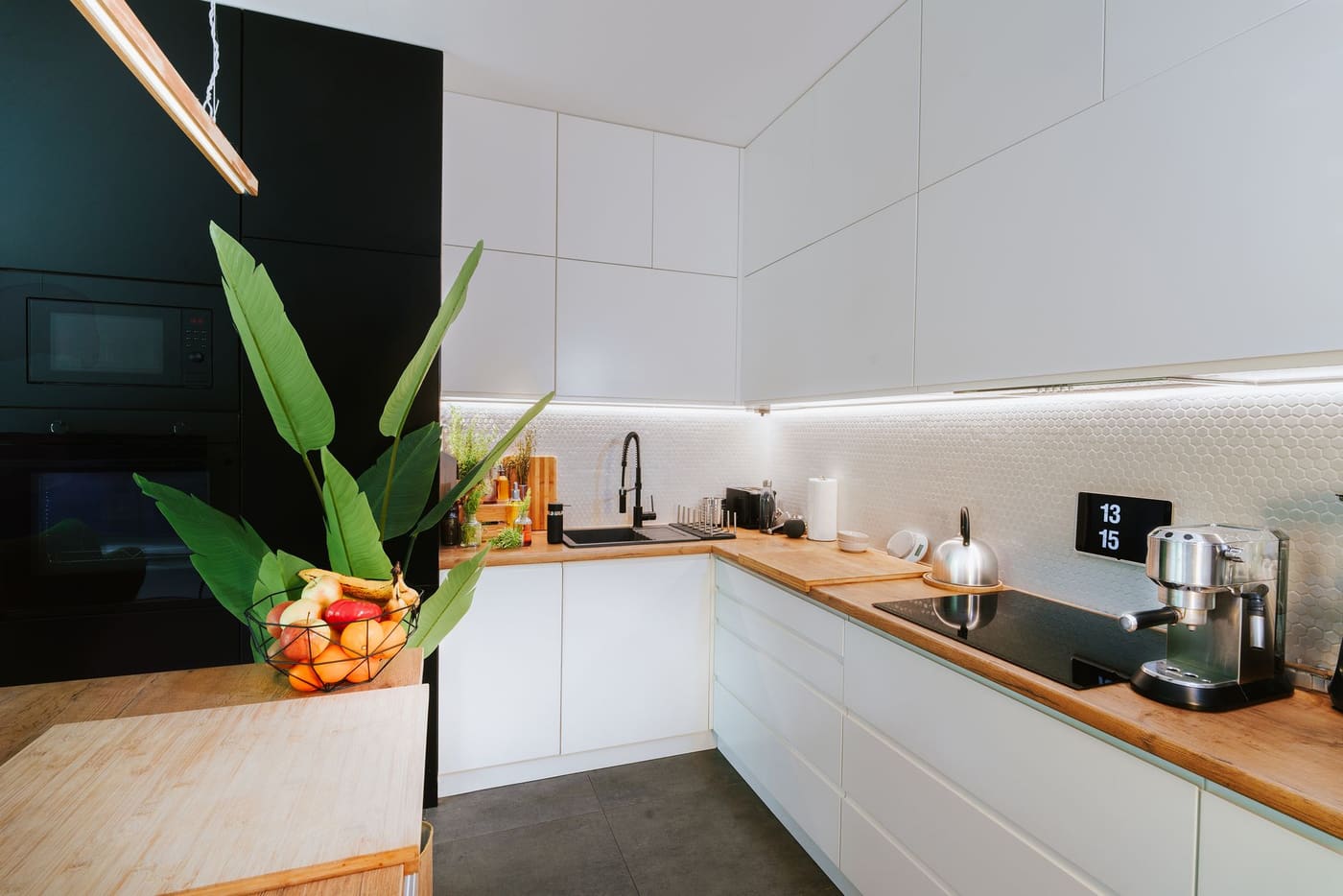
Placing light under the wall cabinets, close to the counter and in front of you, removes the shadow problem and brightens the backsplash. Types include:
- LED light bars or strips, commonly $20 to $80 for a kitchen (rough US range), often linkable end to end.
- Plug-in versions, which need an outlet nearby and no wiring.
- Battery or rechargeable puck lights, which cost less and need no outlet, but you have to recharge or replace batteries.
- Hardwired fixtures, which look cleanest and can be wired to a switch, but must be installed by a licensed electrician or a skilled person following local code.
Industry lighting guidance suggests mounting fixtures toward the front of the upper cabinet, using lensed or diffused fixtures to cut glare on polished counters, and using the longest fixture that fits so light is even along the whole run, with no dark gaps.
Improve the ambient layer
If the ceiling light is dim, yellowed, or has the wrong bulbs, a refresh helps before you replace anything.
- Check the maximum wattage on the fixture’s label and use LED bulbs that fit under it. LEDs produce the same light at a fraction of the wattage, so a 60-watt-equivalent LED draws far less, often under 10 watts.
- Check the lumens. A typical 60-watt-equivalent bulb is about 800 lumens. Compare the package number rather than the wattage.
- Clean the cover. Dust and grease cut the output noticeably.
- Add a dimmer. Make sure both the dimmer and the bulbs are rated dimmable, or you may get flicker or buzzing.
Recessed lights are another option, often placed about 4 feet apart in a grid, but installing them means cutting ceiling openings and running wire, which is a job for a licensed electrician. Installed cost varies widely, and rules and permits vary by location. In older homes, ceiling materials may contain asbestos or the wiring may be outdated, so have it inspected before opening anything.
Add accent and decorative light with care
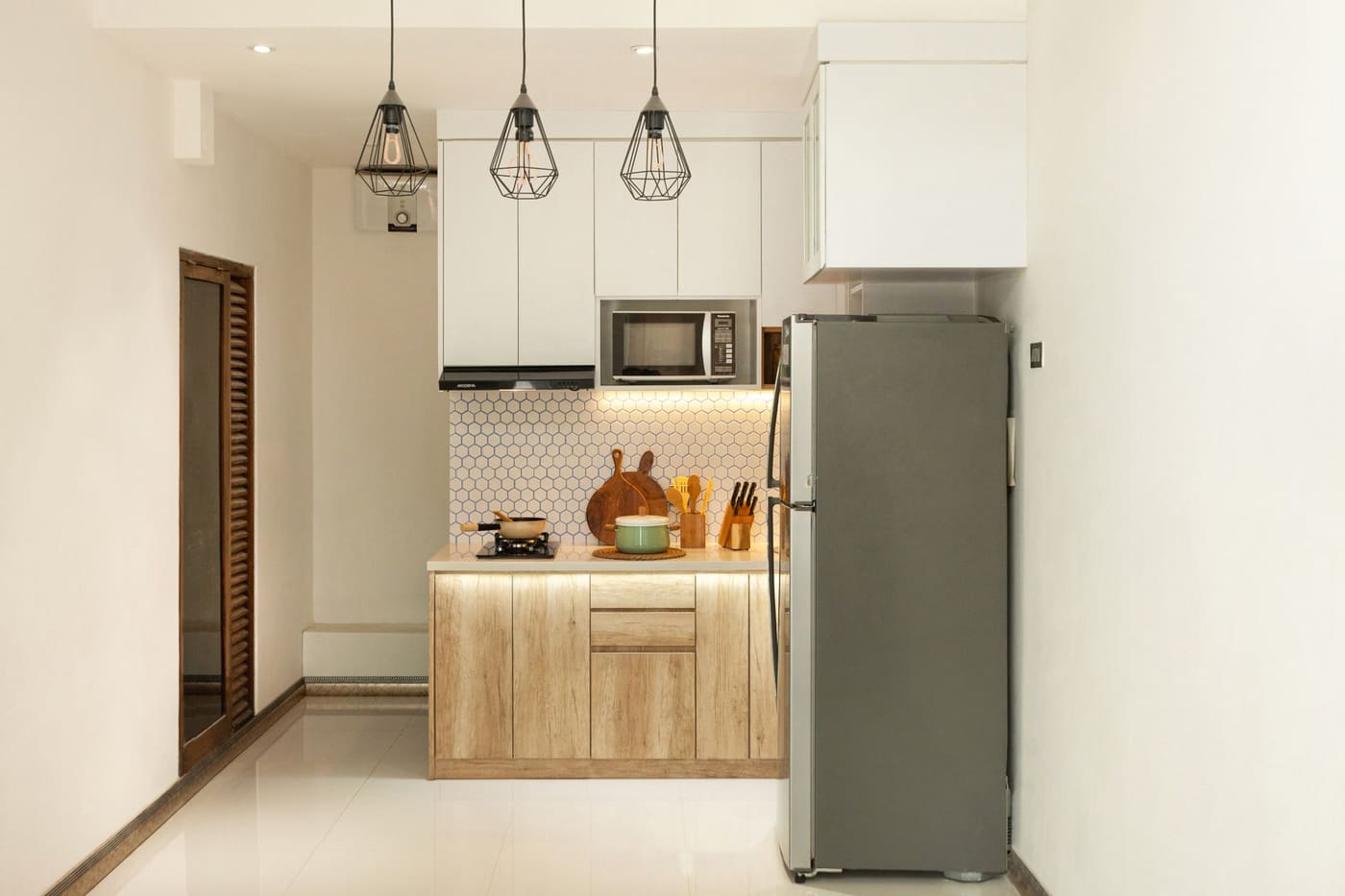
Pendants over an island or a peninsula add personality and a pool of warm light. Common design advice hangs the bottom of a pendant roughly 30 to 36 inches above the counter so it clears sight lines, but check the fixture instructions and your own sight lines. Smaller kitchens often do better with one or two pendants than a row of three or four. Choose shades that diffuse light, such as frosted glass or fabric, rather than bare bulbs, so the glare does not hit your eyes.
Other accent options:
- Toe-kick lights that create a soft glow at floor level, nice for night navigation.
- Lights inside glass-front cabinets, which highlight dishes.
- A small lamp on the counter, a renter-friendly way to add warm light with no installation.
Keep accent light secondary. It should not replace task light, since a pretty pendant with a dim bulb makes a poor work light.
Lighting for renters
Rental kitchens often have one flat fixture and no task light, and you can still improve them without touching the wiring.
- Plug-in or adhesive LED bars under the cabinets, with a cord clipped neatly along the cabinet edge.
- Rechargeable stick-on lights for cabinets and pantries.
- Higher-lumen LED bulbs in the existing fixture, within its rating.
- A floor or table lamp in a corner or on the counter.
- Smart plugs or plug-in dimmers to control a lamp or strip without rewiring.
Do not remove or replace a hardwired fixture unless your lease and local rules permit it, and only an electrician should do it. Keep cords away from the sink and the stove, and use outlets protected by a ground-fault circuit interrupter near water. For more rental-friendly ideas, see renter-friendly kitchen upgrades that actually help.
When to call an electrician
Plugging in a lamp or bar, swapping a bulb, and sticking on a rechargeable strip are fine to do yourself. Anything that involves opening a junction box, connecting wires, adding a circuit or switch, or cutting into a ceiling is electrical work. Mistakes can cause shocks and fires, and local code often requires a permit and inspection. Hire a licensed electrician if a fixture flickers, a switch or outlet feels warm, a breaker trips often, or you see scorch marks. Also hire one if a fixture swap requires touching the wiring. Turning off a breaker is not enough on its own, because the wiring may not be labeled correctly and the circuit may not be what you expect.
How lighting ties into the rest of the room
Good light also helps the layout and the look. A bright, evenly lit counter makes a workspace feel more usable, which supports the goals in what makes a kitchen layout feel easy to use. Warm accent light and the right color temperature make wood, tile, and paint look better, which is part of making a kitchen look better without overdecorating. Light-colored walls and a reflective backsplash bounce more light around, so the same fixtures feel brighter.
To work out how bright under-cabinet lighting should be, use the under-cabinet lighting calculator.
Where this comes from
This guide draws on the National Kitchen & Bath Association’s published lighting tips for kitchens (task light level, color temperature, CRI and under-cabinet placement) and on general electrical-safety practice for fixtures, dimmers and ground-fault-protected outlets. It is not based on hands-on testing of products. Lighting specs, bulb ratings and prices change, so check the fixture label and the product package for current figures.