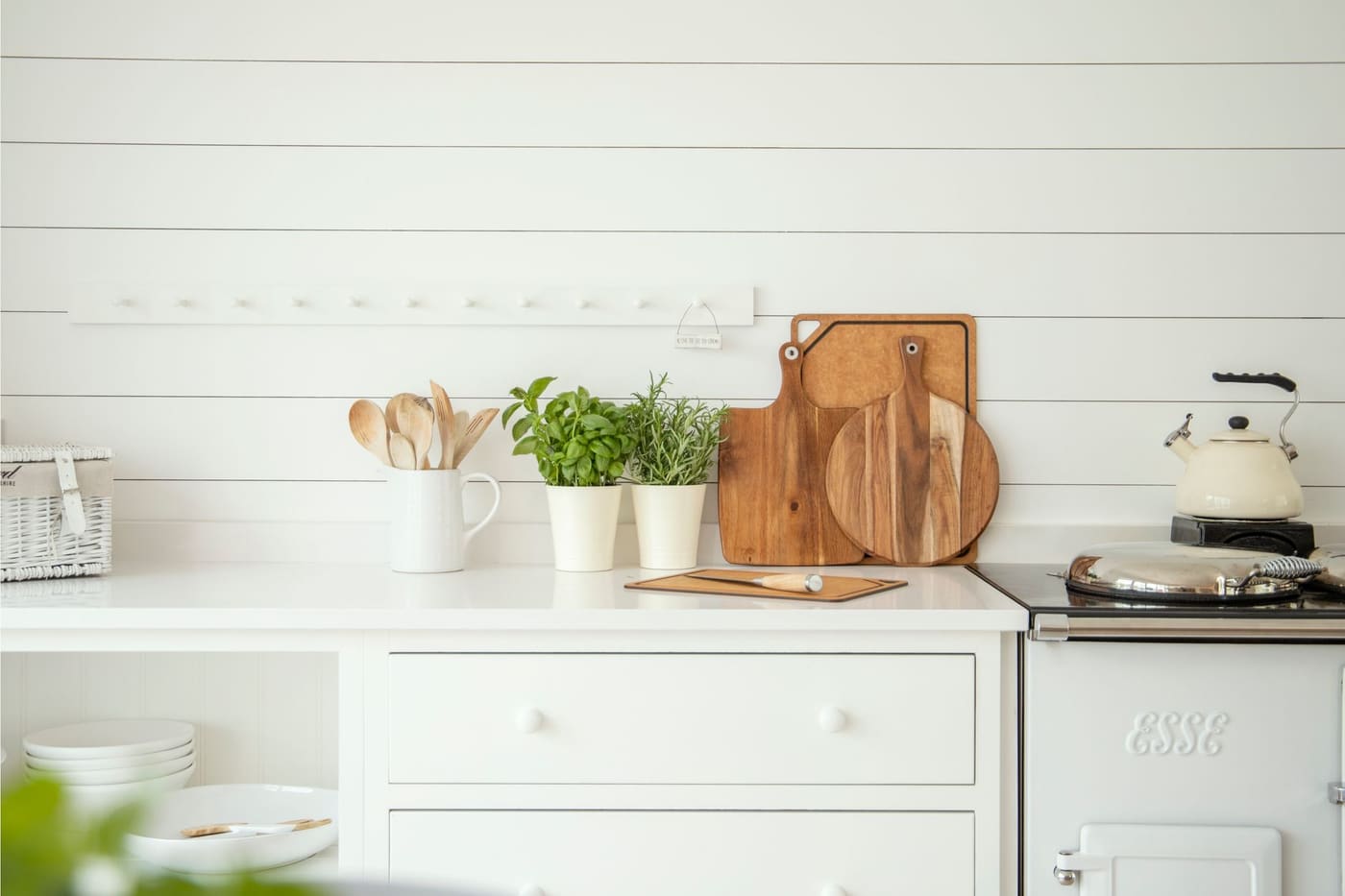
A kitchen looks better without overdecorating when you edit the surfaces down, repeat a small set of colors and materials, add warm light, and put out a few objects that are useful or genuinely good-looking. Restraint is what makes a kitchen look styled. Most of the upgrade comes from removing visual noise, not adding accessories.
Kitchens are working rooms, so every decorative object competes with food prep, cleaning, and storage. The sections below cover what to change first, which materials and colors tend to work, and how to stage a few pieces so they look intentional.
Edit before you decorate
You cannot style a cluttered counter. Start by clearing everything off one surface and putting back only what you use daily. Then look at the room as a whole: the refrigerator door, the tops of the cabinets, the windowsill, and the open shelves are all places where visual clutter collects.
- Refrigerator front. Cut the magnets and papers down to a small number, or move the lot to a corkboard or a clipboard inside a pantry door.
- Cabinet tops. Remove anything that has been up there for years. If you want to keep one or two baskets, make them matching.
- Window sills. Keep one or two items so light and the view stay the focus.
- Counters. Use the guidance in what stays on the counter and what gets put away to decide which daily tools deserve to stay out.
A calm base makes even inexpensive items look better. Many kitchens look noticeably improved after nothing but a thorough clear-out and a wipe-down.
Keep a tight palette
Mixed finishes and too many colors make a kitchen look busy. Pick a simple formula and repeat it:
- One main neutral, such as white, cream, gray, or a soft greige, on walls and most surfaces.
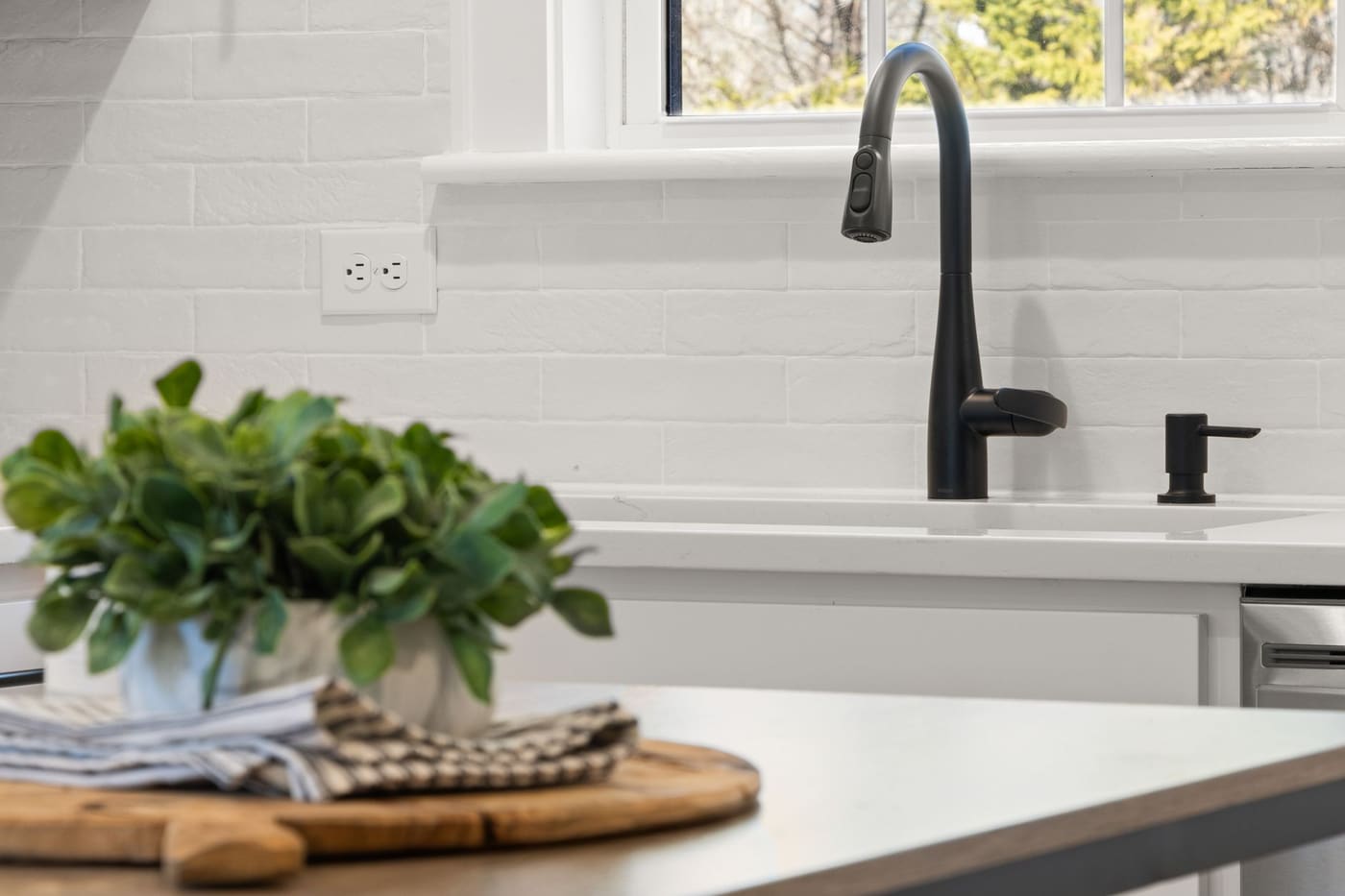
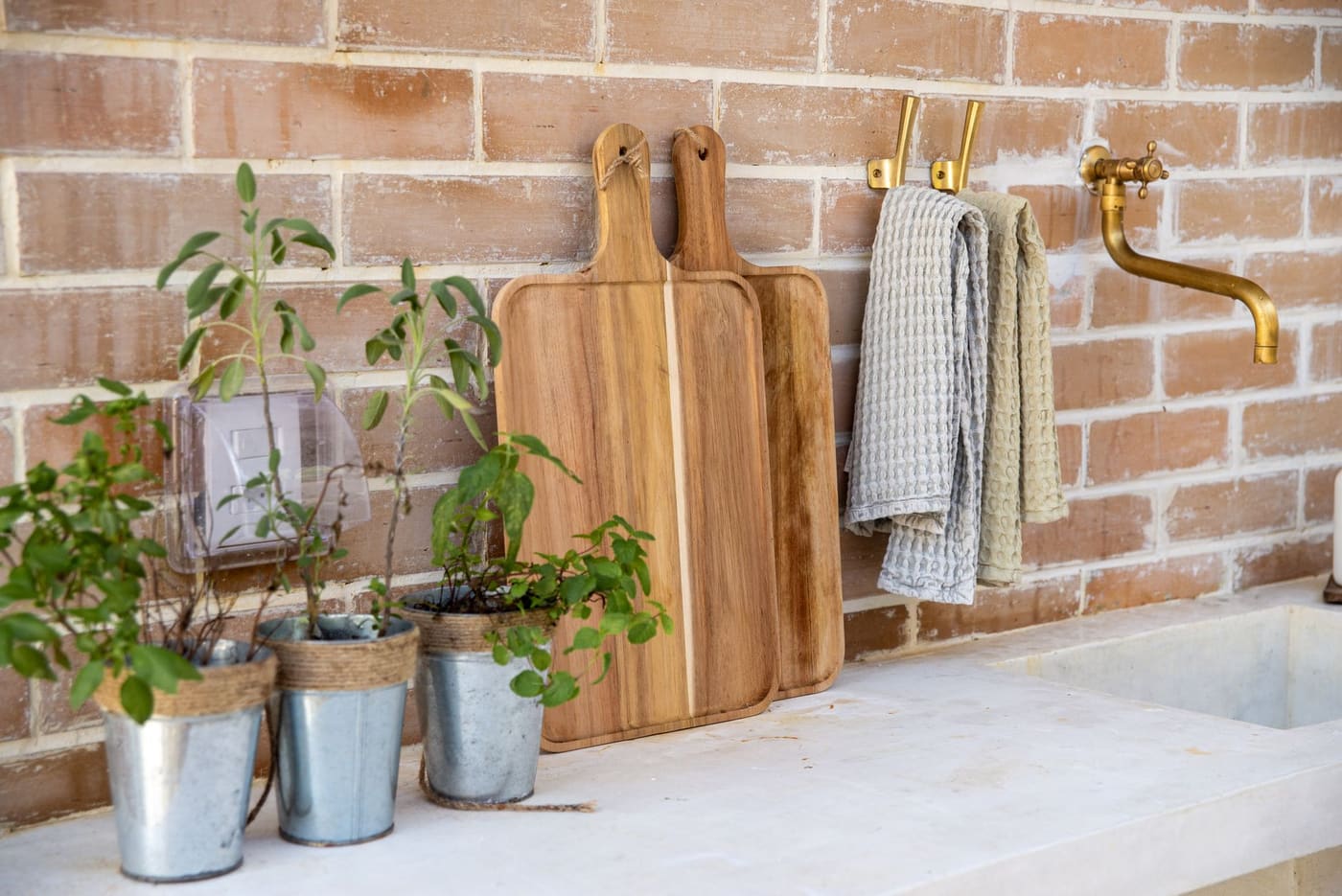
- One or two supporting materials, such as natural wood and matte black or brass.
- One accent color, used in small doses, such as a sage green towel, a blue ceramic pitcher, or a few terracotta pots.
Repeat each finish at least two or three times so the eye reads it as a plan. If your cabinet hardware is brushed nickel, matching a faucet and a few small accessories to the same finish looks cleaner than mixing four metals. You can mix metals on purpose, but stick to two at most and place them evenly around the room.
A common decorating rule of thumb is roughly 60 percent main color, 30 percent secondary and 10 percent accent. It is a guideline, not a law, but it is a useful check when a room feels off.
Add warmth with materials and light
Cold, flat kitchens often look bare because they lack texture and warm light. Two cheap changes help the most.
Texture and natural materials. Wood, stone, ceramic, linen, and woven fibers add warmth. A wooden cutting board leaning against the backsplash, a stoneware crock for utensils, a linen towel on the oven handle, and a woven basket for fruit or onions each add a layer without much clutter. Keep an eye on safety. Do not place wood, paper, or fabric near burners, and do not leave towels draped over a hot oven door.
Warm light. Bulbs around 2700K to 3000K give a warm white that flatters wood and food, while very cool bulbs (5000K and up) can look harsh in a home kitchen. Adding under-cabinet light brightens the counters and reflects a soft glow on the backsplash, and plug-in LED strips usually cost about $20 to $80. Read about what kitchen lighting actually improves the room for more detail on layers of light. Lighting is often the most visible change for the money.
Choose a few objects that earn their place
Decor works best when it is useful or personal and limited in number. A short list of items that usually works:
| Item | Why it works | Typical cost |
|---|---|---|
| Cutting board or two | Useful, warm, and easy to display | $15 to $60 |
| Ceramic utensil crock | Keeps tools at hand and adds a clean shape | $15 to $40 |
| Small plant or herb pots | Adds life and color | $5 to $25 |
| Bowl of fruit, lemons, or onions | Real, inexpensive, and changes with the season | A few dollars |
| Framed print or small art | Brings personality to a bare wall | $15 to $80 |
| Cloth towels | Texture and color in one item | $10 to $30 |
Avoid buying decor that has no function and no meaning to you, such as wall signs with slogans or large sets of matching canisters, which tend to feel generic and take up storage. If you have items you love, such as a vintage bowl or a family casserole dish, display those, since personal pieces make a kitchen feel real.
Group items and leave empty space
How you arrange objects matters as much as which ones you choose. Group a few items together on a tray or a board so they read as one unit. Odd numbers, such as three, usually look more natural than pairs. Vary the heights, for example a tall bottle, a medium bowl, and a short dish, so the eye moves across them.
Then leave blank space around the grouping. Empty counter and wall are not wasted. They are what let the arranged objects stand out, and they keep the room feeling calm. If every inch has something on it, nothing stands out. A simple test is to take a photo of the kitchen. If your eye does not know where to rest, remove one item from each area.
Use open shelves and walls with care
Open shelves look great in photos and are demanding in real life, since grease and dust settle on everything. If you use them, keep to dishes you use every day, which means you will wash them often. Stack plates and bowls in matching sets, and leave about a third of the shelf empty. Closed cabinets are better for odd or mismatched items.
For walls, one well-placed piece usually beats a gallery. A single large print, a hanging rail with a few copper or wooden pieces, or a simple mirror can add depth. Keep art away from the splash zone behind the sink and stove, where grease and steam will damage it. In a rental, use removable hooks and check the weight rating before hanging anything heavy over a counter.
Cheap upgrades that look intentional
If you want something a little more substantial than accessories, these options typically cost far less than a renovation:
- Cabinet hardware. Replacing knobs and pulls usually runs about $2 to $10 per piece and can modernize a kitchen in an afternoon. Measure the distance between screw holes to buy matching sizes. Keep the old pieces if you rent.
- Paint. A fresh coat of wall paint, usually about $30 to $70 per gallon, brightens a room. If your home was built before 1978, test for lead before sanding old paint and use proper dust control.
- A new faucet or light fixture. Both make a visible change. Faucet swaps are within the reach of many DIYers, but if you are not comfortable working with plumbing shutoffs, hire a plumber. For hardwired light fixtures, turn off the breaker, verify power is off, or hire a licensed electrician.
- A peel-and-stick backsplash or a rug. Quick, low-commitment changes that add color. Use a non-slip pad under a rug to prevent trips.
Find more options in the guide on which kitchen updates make the biggest difference without a full renovation.
A quick one-hour reset
If you want to see the effect before spending anything, set a timer for an hour. Clear every counter completely and wipe it down. Put back only the daily items, and group them on a tray or a board where it makes sense. Take down anything from the refrigerator door that is more than a few months old. Straighten towels, line up the dish soap and sponge in a single spot, and swap any bulky or mismatched dispenser for a plain one. Open the blinds, turn on every light you have, and then stand in the doorway and look. The room usually looks calmer even though nothing new came in. What remains tells you where a small purchase, such as better light or a plain set of hardware, would help most.
Where this comes from
This is a styling guide, so it rests on common interior-styling practice (editing, a limited palette, grouping odd numbers) rather than any test, and on consumer safety guidance for lead paint in homes built before 1978 and for keeping flammable items away from burners. Light color temperature advice follows the National Kitchen & Bath Association’s lighting tips, which suggest warm white for general kitchen light. Prices are rough US ranges and change, so check current figures at the store.